
The Courage to Begin
Starting before you're ready.

Beginning is often described as a choice. But lately I’m wondering whether it’s better understood as a meeting. A conversation between what is asking to come into being, and our willingness to participate in that process.
We’re taught to imagine beginnings as dramatic moments: writing the first page of a novel, getting in the car and leaving, picking up a paint brush and staring down a blank canvas. But most beginnings are less dramatic than that. And there are so many steps between thinking about something…and actually doing it.
A beginning is usually a persistent thought. A half-formed image. A feeling. A phrase we can’t forget. A curiosity that keeps returning despite our attempts to ignore it. Something is gathering. Not fully formed or certain but gathering nonetheless.
The problem starts when we consider readiness a prerequisite to beginning.
We tell ourselves we’ll start when we have more confidence. More clarity. More energy. More certainty that our efforts will amount to something worthwhile or at least unembarrassing. But in my experience, readiness never precedes a beginning. More often, readiness is what develops through participation.
We become ready by entering the conversation; making the first mark, taking the first step, allowing ourselves to encounter what becomes possible once movement begins.
In my creative coaching work, I see this all the time. People arrive believing they need to rid themselves of fear before they can change. That they must solve the jigsaw puzzle before daring to take it out of the box.
Building tolerance for beginning something only happens through doing something differently. Understanding only comes through trying. The path reveals itself through regular moments of contact: the contact between our potential and our efforts.
The philosopher and process thinker Alfred North Whitehead said that reality is not made up of static things, but events; ongoing occasions of becoming. Contemporary new materialist thinkers agree. Creation is never a solitary act. We are always participating in larger fields of relationship: with other people, with place, with memory, with language, with the materials in our hands.
This includes relationships with parts of our own selves. Like the part that wants to emerge (through beginning something) and the part that dreads beginnings. Beginning then, is not a manufactured decision of the brain alone. It’s something we slowly enter into. It’s a meeting place between our patterns, our values, our old selves, and all our not-yet-known potentialities.
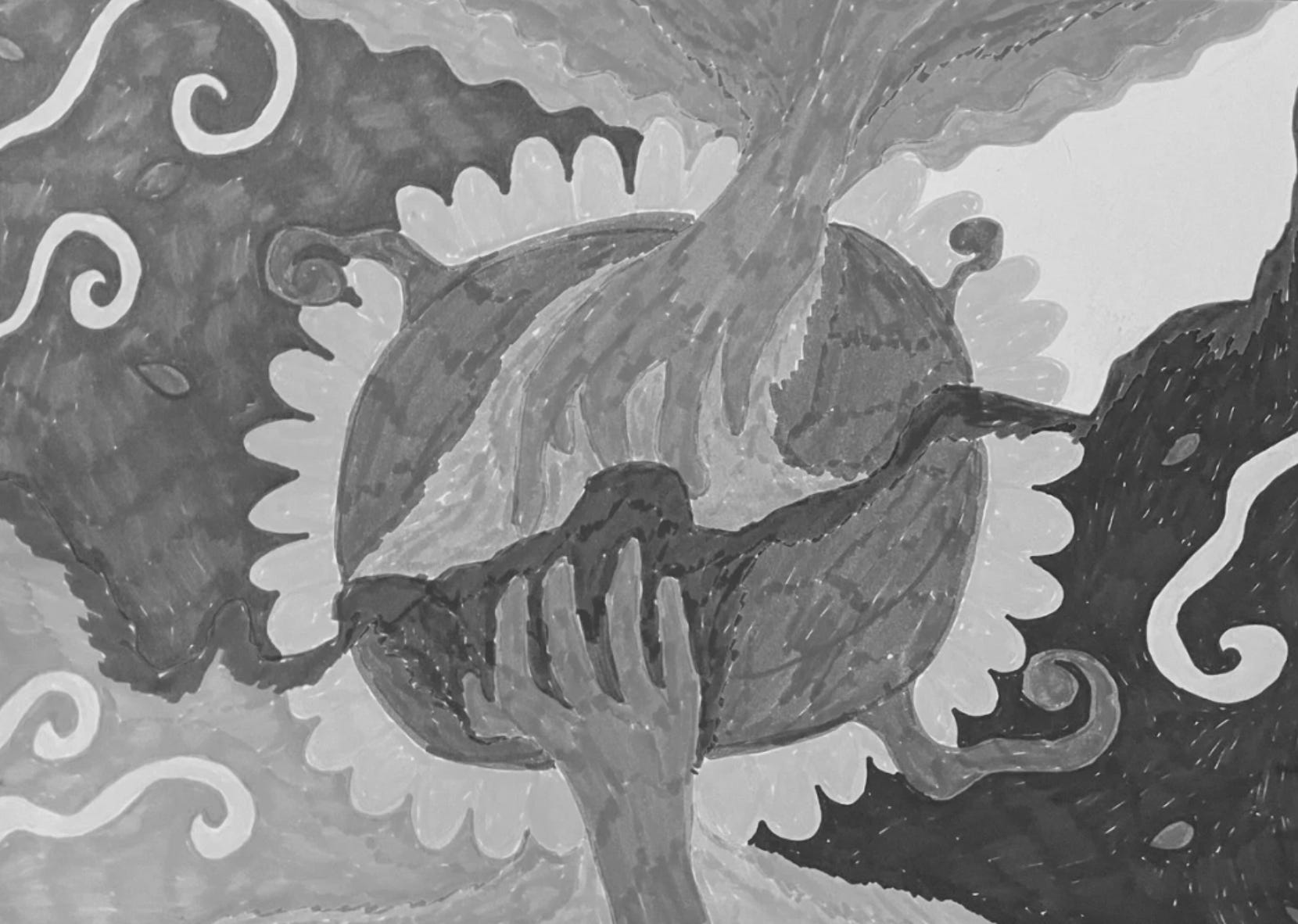
In the nondual Śaiva traditions, the Sanskrit term Spanda refers to the subtle pulse or vibration through which all life continually unfolds. A movement that pervades in everything, as everything. I return to this image often. It softens the fantasy that everything depends on the force of cerebral will. I have found that every time, no matter what: the task is not to push harder. It’s to notice what’s already stirring and to pay attention to the small movements between what is, and what could gently emerge if we let it.
Beginnings don’t announce themselves with trumpets. I see them as quiet repetitions. That gentle knocking. And then, there comes an inevitable moment when we must decide whether to (equally gently) open the door. Despite not knowing what’s on the other side, or where it will lead. Despite the discomfort of putting one unsure foot in front of the other. And because we’ve identified a willingness, amid the uncertainty. A quality of curious improvisation. A small trust in the jazz of life. This is where courage comes from.
This is how we make contact with something unknown and unfinished, and allow both ourselves and it to be changed by the encounter. We become together, through an/other. Through nurturing the relationship between (often dissonant) parts of ourselves.
This is how the artist starts before the work knows what it wants to become. This is how the gardener plants without guarantees, or the writer sits down at an empty page. This is why the therapist asks a question without knowing what kind of answer will arise.
Again and again, beginning something asks us to exchange certainty for participation with another force. And perhaps this is why it feels so vulnerable. It’s because a beginning isn’t a declaration of confidence or mastery. It’s an admission that you don’t know. And that you’re willing to be surprised.
A small note about Thresholds
As I was writing this piece, I realised it speaks not only to personal beginnings, but to one unfolding here and now. Over the past year, Thresholds has developed a couple of recurring forms for paid subscribers: namely monthly Seasonal Thresholds and Full Moon Ritual Guides. I’ve heard that these have been meaningful for some of you, and they’ve given me a routine (and format or container) within which to write. Lately though, I’ve been feeling the edges of that container. Not because anything is wrong with it, but because I find myself wanting a little more room to follow what feels alive.
Rather than asking, “What should I write because the zodiac calendar says it’s time?” I want to spend more time asking, “What is genuinely calling for attention right now?” Sometimes that may still result in a seasonal reflection, or ritual guide. For example (and as you may have guessed) this article on beginnings was inspired by today’s Sagittarius full moon. But I would like to honour the possibility that these times may call for an essay, personal reflection, prompts, media, or something completely different.
So while the rhythm of publication will remain largely the same, the forms themselves may become more varied, with a greater emphasis on depth, experimentation, and responsiveness rather than recurring franchises. And all posts will again be free to read. The paid tier will continue for those who value my work and would like to ensure its sustainability. I understand that some readers may have subscribed specifically for these paid franchises, however. If this change means Thresholds no longer serves what you came here for, I completely understand. And if you’d like to continue alongside me as the publication evolves, I’m deeply grateful.
In many ways, this feels true to the spirit of a threshold itself. As in, a place of perpetual becoming. And this publication deserves the freedom to become, too.
Journalling invitations on beginning
What keeps returning? Consider an idea, longing, project, conversation, or question that keeps visiting you. What might it be asking of you?
Write from the middle. Instead of beginning at the beginning, write from wherever you are right now. What changes when you stop waiting for the perfect starting point?
A conversation with the threshold. Imagine the threshold you’re at right now could speak. What would it want you to know before crossing?
What am I calling hesitation? Might it contain something other than fear: care, discernment, grief, excitement, responsibility?
What is already beginning without my permission? Where is life already moving, changing, gathering, or unfolding?
What would a very, very small conscious beginning look like? Not the whole project. Just the next five-minute step, small conversation, sketch, quick email, or another kind of action. Break it down to its smallest and crappiest (scrappiest) form.
Creative invitations
Gathering forces: Create an image using whatever materials are nearby. Rather than depicting the outcome you want, focus on everything contributing to the beginning: people, places, memories, materials, emotions, accidents, and desires. You might like to illustrate this like the weather, a car, or another energetic force.
Trace a becoming: Without lifting your pen from the page, create a continuous line. Let it wander. Notice where it hesitates, speeds up, loops back, or changes direction. Push a pebble with your pen, or use your nondominant hand to relinquish more control.
Crossing over: Find a doorway, path, shoreline, gate, or threshold in your environment. Spend ten minutes there. What do you notice about movement, transition, arrival, and departure?
If you’re standing at the edge of something right now, sound off. And thank you for reading, for reflecting, and for accompanying me at our shared thresholds of beginning and becoming.
Warmly,
Jerico